
There is a moment in most households — somewhere between the third paper towel and the second round of deep-frying — when someone quietly wonders whether the wings were worth it. Not the taste.
Nobody questions the taste. But the cloud of oil vapor, the grease pooled in the pan, the post-meal heaviness that sits on you for the rest of the evening: those are harder to defend. That moment is why this recipe exists.
Chicken wings, but make them healthy is not a compromise. That phrase gets used to sell a lot of sad food. Baked wings that come out pale and flabby, air-fried attempts that skip the brine and wonder why the interior is dry, sauces thickened with cornstarch slurries that taste mostly of sugar. None of that here.
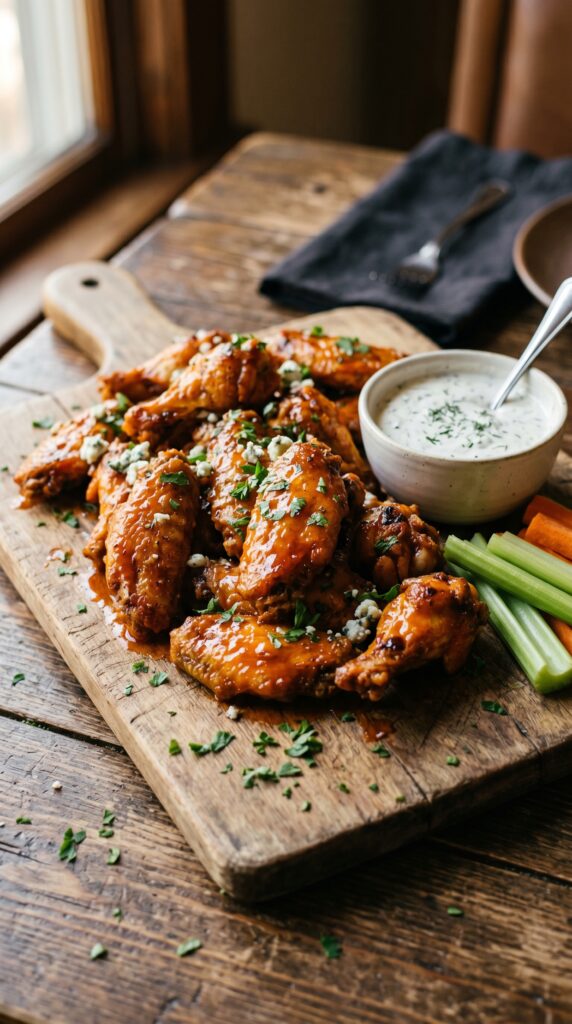
What this recipe delivers is a wing with genuine crunch — the kind you hear from across the table — a deeply seasoned interior, and a sauce you can feel good about eating more than once a week. The fat count drops by more than half compared to restaurant-style deep-fried wings, and the sodium is manageable rather than face-swelling. You get to eat wings on a Tuesday and not feel like you’ve blown something.
A word on where wings come from. Buffalo wings were invented in 1964 at the Anchor Bar in Buffalo, New York, by Teressa Bellissimo, who tossed fried leftover wings in hot sauce and butter on a slow Friday night. They were an afterthought that became a cultural institution. The genius of that original recipe — simplicity, acidity, fat — still underpins every good wing today, healthy version included. What we’re doing here isn’t reinventing the wing. It’s pulling out the parts that make it good and removing the parts that make it a once-in-a-while food.
The personal note. My introduction to oven-baked wings came from a PT who told me, with zero diplomacy, that my idea of “meal prepping” wasn’t going to get me anywhere useful. She wasn’t wrong. I’d been avoiding wings entirely on weekdays — treating them as a cheat food — when the actual problem was my cooking method, not the chicken itself. She showed me the baking powder trick (more on that below), and within two weeks I was making wings four times a month without guilt. That was eight years ago. I have not gone back to deep-frying.
The Ingredient That Makes This Work: Baking Powder
The single most important ingredient in a healthy chicken wing recipe is one most people keep in their pantry for cakes: aluminum-free baking powder.
Dusting raw wings with baking powder before they go into the oven raises the skin’s pH, which speeds up the Maillard reaction — the browning process that produces crunch and roasted flavor. The result is a skin that puffs, crisps, and darkens like a wing that went through hot oil, except it’s been sitting on a wire rack in a 425°F oven the whole time.
The aluminum-free specification matters. Regular baking powder contains sodium aluminum sulfate, which leaves a metallic aftertaste on anything with a neutral or low-fat coating. Since you’re not submerging the wing in oil — which would mask that flavor — you’ll taste it. Brands like Bob’s Red Mill, Clabber Girl’s aluminum-free version, or Rumford work well. If you can only find regular baking powder, rinse and thoroughly dry your wings afterward and use only half the amount.
Smart substitution: No baking powder at all? A light dusting of arrowroot powder mixed with a pinch of cream of tartar gets you roughly 70% of the way there. Not identical, but the wing will still crisp reasonably well if your oven heat is high and consistent.
One critical caveat: baking powder is not the same as baking soda. Baking soda (sodium bicarbonate alone) will over-alkalize the skin and give you a brownish, slightly soapy result. It’s a common mistake. Check your container before you reach for it.
The Technique That Prevents the One Thing Everyone Gets Wrong
The most common failure in healthy baked wings isn’t the oven temperature. It’s moisture.
Raw chicken skin holds water. When that water hits a hot oven, it steams before it can brown, which is why home-baked wings so often come out with a soft, slightly rubbery skin even when they’re fully cooked through. You’ve essentially been fighting condensation with high heat, and the condensation usually wins for the first 15 minutes.
The fix is two-part. First, pat the wings completely dry with paper towels before you season them — more aggressively than you think necessary. Second, let them rest uncovered in the refrigerator for at least one hour after coating with the baking powder-spice mix, or ideally overnight. The fridge air removes surface moisture far more effectively than any pat-dry can. You’ll notice the wings look almost chalky and dry before they go in the oven. That’s exactly what you want.
The second technique: use a wire rack set inside a rimmed baking sheet, not a flat baking sheet alone. Elevating the wing lets hot air circulate under the skin. Wings sitting flat on metal sit in their own drippings, which re-steams the underside throughout cooking. The wire rack is non-negotiable if you care about bottom-crust texture.
One more thing: flip the wings once, at the 25-minute mark. Not earlier, not repeatedly. Moving them too soon pulls the skin off the rack before it’s set; moving them too often interrupts the browning cycle.
On the Healthy Recipe Side of Things
It’s worth being specific about what “healthy” means here, because the word is used loosely enough to cover almost anything.
These wings are baked, not fried. Total fat per four-wing serving is approximately 9–11 grams depending on wing size, compared to 18–22 grams for restaurant deep-fried. Calories land around 210–240 per four wings before sauce, which puts them firmly in the “sustainable weeknight meal” category when paired with a vegetable or a grain.
The sauce in this recipe uses hot sauce as its base — Frank’s RedHot Original is still the standard, and the ingredient list is clean: aged cayenne pepper, vinegar, water, salt, garlic powder — combined with a small amount of good grass-fed butter (or ghee for a slightly nuttier flavor) and fresh lemon juice. No cornstarch, no sugar added, no seed oils. The fat is intentional and small: butter carries flavor compounds that water and vinegar can’t, and the quantity used is roughly half a teaspoon per serving.
For a dairy-free version, replace the butter with refined coconut oil and add a quarter teaspoon of apple cider vinegar for acidity. The sauce will be thinner and slightly sweeter, but the flavor holds up.
For gluten-free eaters: the base recipe is naturally gluten-free, assuming your hot sauce and seasonings are certified. Check your smoked paprika and garlic powder, since spice blends are common cross-contamination sites in shared facilities.
For halal preparation: use halal-certified chicken and ensure your hot sauce is halal-compliant (most plain hot sauces are, but verify the vinegar source if that matters for your household).
Ingredients
For the wings:
- 2 lb (900 g) chicken wings, separated into flats and drumettes (fresh or fully thawed if frozen — never cook from frozen)
- 1 tbsp (12 g) aluminum-free baking powder (Bob’s Red Mill or Rumford recommended; see substitution note above)
- 1 tsp (5 g) fine sea salt (not table salt — finer grain means more even coverage)
- 1 tsp (3 g) garlic powder (granulated, not garlic salt)
- 1 tsp (3 g) smoked paprika (sweet smoked rather than hot; adds depth without competing with the sauce)
- ½ tsp (1.5 g) onion powder
- ½ tsp (1.5 g) ground black pepper, freshly cracked
- ¼ tsp (0.5 g) cayenne pepper (optional; omit entirely if serving to heat-sensitive guests)
For the healthy buffalo sauce:
- ⅓ cup (80 ml) Frank’s RedHot Original hot sauce (or Cholula if you prefer a slightly more complex, less sharp heat)
- 1 tbsp (14 g) unsalted grass-fed butter, cold and cubed (cold butter emulsifies more evenly into the sauce; substitution: refined coconut oil or ghee)
- 1 tsp (5 ml) fresh lemon juice (bottled lemon juice is noticeably thinner in flavor here — worth squeezing fresh)
- ½ tsp (2 g) garlic powder
- ¼ tsp (1 g) smoked paprika
- Pinch of fine sea salt (taste before adding; hot sauce is already salted)
For the dry rub variation (if skipping the sauced wing):
- All wing spice ingredients above, doubled
- Add 1 tsp (4 g) brown sugar or coconut sugar for caramelization (optional but adds a good char note in the last five minutes of cooking)
- 1 tsp (3 g) chili flakes
- ½ tsp (1 g) dried oregano
Optional garnish and finishing:
- 1 tbsp fresh flat-leaf parsley, finely chopped (adds freshness and color against the orange sauce)
- 1 tsp sesame seeds, toasted (works better with an Asian-glaze variation)
- 2 green onions, thinly sliced on the diagonal
- Flaky sea salt for finishing (Maldon or fleur de sel; the crunch and burst of salt at the end is different from seasoning during cooking)
For serving alongside:
- 1 cup (240 ml) plain Greek yogurt (full-fat, 5% or higher — this is your base for a lighter ranch or blue cheese dip)
- 1 tbsp (15 ml) apple cider vinegar
- 1 clove garlic, finely grated (for the dipping sauce)
- ½ tsp dried dill (or 1 tsp fresh, finely chopped)
- Fine sea salt and pepper to taste
Equipment notes: A wire cooling rack and a rimmed half-sheet pan (18 x 13 inches / 46 x 33 cm) are the two pieces of equipment this recipe actually depends on. If you don’t have a rack, elevate the wings on tightly rolled foil “rails” — not perfect, but better than flat. A meat thermometer that reads accurately is worth having; wings are done when the thickest part of the drumette reads 165°F (74°C), but for better texture and full collagen rendering, pulling at 175°F (79°C) is preferable.
Understanding Each Ingredient’s Role
Baking powder has already been covered, but it bears repeating: this is the ingredient that separates a truly healthy wing from a pale, soft disappointment. Don’t skip it or halve it arbitrarily.
Smoked paprika does double duty. It adds a warm, slightly woody background note that reads as “depth” rather than “paprika,” and it contributes to the reddish-brown color that makes baked wings look cooked rather than wan. Sweet smoked paprika (pimentón dulce ahumado, if you’re buying Spanish-style) is preferable here. Hot smoked paprika will compete with the cayenne.
Garlic powder, not fresh garlic. This is one of the few recipes where granulated garlic genuinely outperforms fresh. Raw garlic on the surface of a wing at 425°F (218°C) for 40 minutes will burn and go bitter. Garlic powder hydrates slowly, distributes evenly, and doesn’t scorch. Save the fresh garlic for the dipping sauce, where it shines.
The butter in the sauce. The volume is small — one tablespoon for the entire batch — but it’s load-bearing. Without some fat, hot sauce stays sharp and one-dimensional: just vinegar and heat. A small amount of cold butter, whisked in at the end of gentle heat, rounds the acidity and coats each wing with a glossy, clingy layer that holds the flavor to the skin. Grass-fed butter has a higher beta-carotene content that comes through as a slightly richer yellow color and more pronounced dairy note, which matters in a sauce this simple.
Frank’s RedHot. Not every hot sauce works here. Sauces built on habanero or ghost pepper are too fruity and too face-meltingly hot for the volume used. Sriracha is too sweet and thick. Frank’s is aged cayenne plus vinegar — it has the right acidity level (around pH 3.5) to cut through the fat without dominating the wing. Cholula is a good second choice. Tabasco Original is sharper and slightly more vinegary; if you use it, reduce the lemon juice by half.
Lemon juice vs. lime. Fresh lemon brings a cleaner, brighter acidity. Lime is slightly more aromatic and works well if you’re leaning into a citrus-garlic variation. Either works; what doesn’t work is bottled citrus juice that’s been sitting in your fridge door for three weeks.
Scaling the Recipe
This recipe as written serves 3–4 people as a main, or 6 as a snack. It scales cleanly: doubling the batch works if you have two wire racks and two sheet pans that can occupy different oven positions simultaneously. Avoid stacking pans directly — the lower pan gets the radiant heat from the upper pan’s sheet rather than the oven’s element, and the results diverge considerably.
If you’re cooking for one and want to portion into meal-prep servings: the cooked, un-sauced wings refrigerate well for up to three days and reheat at 400°F (204°C) for 8–10 minutes to regain crispness. Sauce them after reheating, not before storage — sauce softens the skin during refrigeration.
Notes on Wing Selection
The difference between a grocery store party wing and a wing from a butcher or a farmers market is noticeable in this recipe precisely because the skin is the star. Conventionally raised wings tend to have thinner, more fragile skin that tears easily and crisps unevenly. Heritage-breed or pasture-raised wings — Jidori, if you can find them in the US — have thicker, more evenly distributed fat under the skin, which self-bastes as it cooks and produces a noticeably superior result.
That said, this recipe has been tested extensively with standard grocery store wings and produces an excellent outcome. The technique does most of the work.
Avoid pre-marinated wings or “value-added” products that come with sodium solution injected into the muscle. The brine throws off the baking powder ratio and adds enough moisture to counteract the drying step entirely. Plain, simple raw wings only.
If you’re buying whole wings and breaking them down yourself: cut at the joint between the flat and the drumette, and remove the wing tip entirely (save it for stock). A sharp chef’s knife at the joint, not through bone, makes this a three-second cut per wing.
On the Healthy Recipe Philosophy Here
A lot of healthy recipe writing starts from a position of removal: take out the oil, reduce the butter, eliminate the skin. That approach treats enjoyment as the problem to be solved, and it tends to produce food people eat because they feel they should rather than because they want to.
The approach here is different. The goal is not to reduce this recipe to its least indulgent form. It’s to understand what makes wings good — crunch, seasoning, a sauce that coats — and find a way to deliver all of that through a method that doesn’t require two liters of vegetable oil or a post-meal two-hour nap.
Baking powder handles the crunch. Good seasoning ratios handle the flavor. A small amount of real butter in the sauce handles the coating and richness. The chicken itself — when you buy it without brine injections — is a naturally lean, high-protein ingredient. The skin, for all its reputation, contains roughly 3–4 grams of fat per wing segment, most of it unsaturated. In context: that’s less fat than a tablespoon of olive oil.
Healthy cooking doesn’t have to mean stripped-down cooking. It means understanding your ingredients and respecting what they do. That’s as true in a Michelin-starred kitchen as it is on a Tuesday night in your apartment.
What to Serve With
A wing is not a complete meal on its own — or rather, it can be, but it benefits from contrast. Here are seven pairings that actually work, chosen for texture, flavor balance, and practical weeknight convenience.
Greek Yogurt Ranch Dip (the dipping sauce this recipe already includes) The cool, tangy yogurt base cuts the heat from the buffalo sauce and provides a creamy contrast to the crispy skin. Using full-fat Greek yogurt rather than sour cream or low-fat yogurt keeps the texture thick enough to cling to the wing rather than pooling at the bottom of the bowl. This dip doubles as a salad dressing if thinned with a tablespoon of water or buttermilk.
Celery and Carrot Sticks, Cut Thick The standard companion for a reason: the cool crunch and mild sweetness of raw celery resets your palate between wings and tones down the cumulative heat. Cut the celery into 4-inch (10 cm) sticks rather than the thin slivers you get at a bar — thick cuts have structural integrity for dipping and more satisfying crunch. Carrots add natural sweetness. No dressing needed beyond the dip.
Simple Shaved Cabbage Slaw Half a small head of green cabbage, shaved thin on a mandoline or sliced by hand, tossed with two tablespoons of apple cider vinegar, a teaspoon of honey, a pinch of celery seed, salt, and pepper. No mayonnaise. This slaw is bright and acidic rather than creamy, which means it doesn’t compete with the yogurt dip and provides a vegetable component that actually refreshes rather than fills. It holds for two hours without going limp, which makes it good for informal entertaining where everything doesn’t hit the table at once.
Roasted Sweet Potato Wedges The natural sweetness of sweet potato against buffalo heat is one of those combinations that shouldn’t work as well as it does. Toss wedges in a teaspoon of olive oil, a pinch of smoked paprika, salt, and pepper; roast at the same 425°F (218°C) oven temperature alongside the wings, starting them 10 minutes earlier since they take longer. The shared oven temperature is the practical bonus — no juggling. Sweet potato also adds fiber and complex carbohydrates that make this a genuinely complete meal.
A Simple Arugula Salad with Lemon Vinaigrette The peppery bitterness of arugula plays against the fatty richness of the wing in a way that blander greens don’t. A sharp lemon vinaigrette (two tablespoons lemon juice, one tablespoon good olive oil, half a teaspoon Dijon mustard, salt, pepper — whisk together in the bowl before adding greens) cuts through any residual grease on your palate and makes the meal feel lighter overall. Add shaved Parmesan if you want something more substantial, or toasted pine nuts for texture.
Steamed Jasmine Rice or Brown Rice Not glamorous, but genuinely useful when you’re serving wings as a main rather than an appetizer. Rice absorbs the extra sauce and dip, stretches the meal for larger households, and provides the carbohydrate ballast that makes the protein go further. Brown rice adds more fiber and a nuttier flavor; jasmine is lighter and more neutral. Either works. Cook it plain — no butter, no oil — since the wings and sauce already provide plenty of richness.
Sparkling Water with Fresh Citrus, or an Ice-Cold Lager The beverage pairing for hot, crispy wings needs to do one thing: cleanse the palate between bites. Sparkling water with a squeeze of lemon or lime is underrated here — the carbonation scrubs the fat, the citrus echoes the sauce, and you stay hydrated through a meal that involves enough sodium to make you genuinely thirsty. If you prefer something alcoholic, a cold, light lager (not a hoppy IPA, which clashes with the vinegar in the hot sauce) is the classic choice for a reason. The carbonation and mild bitterness of a well-made lager is genuinely better alongside wings than almost any other beer style.
A Note on Portion Sizes and the Meal-Building Approach
One thing worth addressing directly: wings work best as part of a spread rather than as the only food on the table. Not because they’re insufficient, but because variety — a cool crunch, a sweet side, a fresh bitter green — makes the wing itself taste better. Contrast is flavor.
For a weeknight dinner for two, plan on roughly 1 lb (450 g) of wings (8–10 pieces depending on size) per person as a main, or 4–5 pieces per person as part of a larger spread. Pair with two sides from the list above and the dipping sauce, and the meal covers protein, vegetables, and complex carbohydrates without requiring separate planning.
For entertaining, the beauty of this recipe is that the wings can be seasoned and left on the rack in the fridge up to 12 hours before cooking. You assemble the slaw in the afternoon. The dip takes five minutes. By the time guests arrive, the actual active cooking time is minimal — you’re just pulling things out of the oven and tossing in sauce.
The Healthy Recipe Bottom Line
There is a version of “eating healthy” that means eating less food you enjoy. This isn’t that version. Chicken wings, made this way — dried overnight, dusted with baking powder and spice, roasted at high heat on a wire rack, finished with a lean buffalo sauce that uses butter in the same quantity you’d use to finish a pasta — are genuinely good food. Not “good for a healthy recipe.” Just good.
The technique is learnable in a single attempt. The ingredients are available at any grocery store. The result holds up to the standard that matters most: someone eating them doesn’t reach the end of the plate and feel they settled for something.
That’s the whole point.