

Discover the best air fryer cooking tips, temperatures, times, and delicious secrets for perfectly crispy food every single time!
Imagine coming home after a long, exhausting day, feeling hungry but having absolutely no energy to spend an hour preparing dinner. You open your refrigerator, grab a few simple ingredients, and within minutes, your kitchen fills with the irresistible aroma of golden, crispy food. No messy pots of oil, no mountains of dirty dishes, and no complicated cooking techniques. Just delicious comfort food that makes you smile before you’ve even taken your first bite. That’s the wonderful little magic of cooking with an air fryer.
Whether you’re dreaming of perfectly crispy French fries, juicy chicken wings, tender salmon, golden mozzarella sticks, or warm chocolate lava cake, your air fryer can help turn everyday ingredients into something extraordinary. But here’s a secret many beginners discover the hard way: owning an air fryer doesn’t automatically guarantee amazing results. The difference between soggy fries and restaurant-worthy potatoes often comes down to a few surprisingly simple cooking techniques. Once you understand how temperature, timing, airflow, and a little patience work together, you can prepare delicious meals with much more confidence.
In this ultimate air fryer tips and tricks guide, we’ll explore 20 popular foods, helpful cooking temperatures, beginner-friendly techniques, and common mistakes that can ruin an otherwise delicious meal. You’ll discover why overcrowding your basket is such a big mistake, how to achieve that beautiful golden crunch, and what to do when your food cooks unevenly. We’ll also cover the essential safety rules that matter when preparing meat, poultry, seafood, and leftovers. Get ready to rediscover your favorite foods and make your air fryer one of the most loved appliances in your kitchen.
Why Your Air Fryer Deserves a Special Place in Your Kitchen
There’s something deeply satisfying about preparing a beautiful meal without spending your entire evening in the kitchen. Traditional deep frying can deliver incredible crunch, but it also requires substantial cooking oil, careful temperature control, and a rather frustrating cleanup afterward. An air fryer offers a different approach by circulating hot air around your food, creating a browned, crisp exterior while using little or sometimes no added oil. It’s similar to a small, powerful convection oven, designed to move hot air efficiently around ingredients. The result can be wonderfully crispy food without the routine of heating a large pot of frying oil.
One of the biggest advantages of air fryer cooking is convenience, especially for busy families, students, and anyone who wants quick homemade meals. Instead of waiting for a full-sized oven to heat up, you can often begin cooking relatively quickly, depending on your appliance and recipe. Smaller portions are particularly well suited to an air fryer, making it a practical choice for one or two people. You can roast vegetables for lunch, prepare chicken for dinner, crisp leftovers, or make a sweet treat without turning on your entire oven. That flexibility makes everyday cooking feel much less intimidating.
Air fryers can also make it easier to experiment with ingredients that you might otherwise overlook. A humble can of chickpeas can become a crunchy snack, leftover pizza can regain some of its original crispiness, and ordinary potatoes can turn into golden wedges that disappear almost immediately. You don’t need expensive ingredients or professional cooking skills to enjoy these results. What matters most is learning how to adjust the cooking process for different foods, since thin vegetables, thick chicken breasts, and frozen pastries all respond differently to heat. Every meal becomes a small opportunity to discover something new.
The University of Maine Cooperative Extension’s 2026 air fryer guidance highlights several useful fundamentals, including preheating, avoiding overcrowding, shaking the basket during cooking, and choosing oils appropriately. These practical techniques can improve consistency without requiring complicated equipment or specialized culinary knowledge. University of Maine Cooperative Extension
It’s a lovely reminder that better cooking often comes from understanding the basics rather than buying more gadgets. With a little practice, your air fryer can become the appliance you reach for whenever you want something delicious, comforting, and easy to prepare.
The Golden Rules of Perfect Air Fryer Cooking
Before diving into the individual recipes, it’s important to understand a few cooking principles that apply to nearly everything you prepare. An air fryer may look like a small countertop appliance, but its cooking performance depends heavily on how air moves around the food. When that airflow is blocked, moisture has more opportunity to accumulate and your ingredients may soften rather than crisp. The cooking temperature also needs to match the ingredients, because delicate seafood and dense root vegetables require different treatment. Learning these fundamentals will save you from disappointing meals and make experimenting with new recipes much easier.
Preheat for More Consistent Results
Have you ever wondered why one batch of potatoes comes out beautifully golden while another looks pale and uneven? Sometimes the difference is simply the temperature of the cooking basket when the food goes in. Preheating helps create a more consistent starting environment, particularly for recipes that rely on quick surface browning. Depending on your appliance, approximately 2–5 minutes of preheating can be useful, although some models heat rapidly or include instructions that make manual preheating unnecessary. Always follow your manufacturer’s recommendations rather than assuming every air fryer works exactly the same way.
Preheating is especially helpful when preparing frozen snacks, breaded foods, or vegetables that benefit from immediate exposure to hot air. Think of it like warming a skillet before cooking: the food begins heating in a more predictable environment instead of waiting for the cooking surface to reach its intended temperature. However, preheating alone cannot rescue food that is packed tightly into the basket or coated in excessive moisture. Drying ingredients, leaving space between pieces, and monitoring the final minutes remain equally important. When these small habits come together, you’ll begin noticing more reliable results from one meal to the next.
Give Your Food Room to Breathe
One of the most common air fryer mistakes is filling the basket so completely that hot air cannot circulate properly. It’s tempting to pile in an entire bag of frozen fries, especially when everyone is hungry and dinner needs to happen quickly. Unfortunately, tightly packed ingredients can trap moisture and prevent the surfaces from browning evenly. Instead of that delicious, crispy texture you’ve been imagining, you may end up with soft potatoes and unevenly cooked pieces. The solution is surprisingly simple: cook in smaller batches and leave enough space for airflow.
For many foods, a loose layer works better than a tightly packed heap, although some smaller ingredients can overlap if you shake them regularly. Turn large pieces with tongs and shake foods such as fries, chickpeas, and vegetables about halfway through cooking. This redistributes ingredients so different surfaces receive more direct exposure to circulating heat. If a recipe consistently produces uneven results, reducing the quantity in the basket is one of the first adjustments worth trying. A few minutes spent cooking a second batch can be far more rewarding than serving one oversized batch that never gets properly crispy.
Use a Little Oil for Beautiful Golden Crispiness
Here’s a comforting thought: you don’t need a bowl full of oil to enjoy wonderfully crispy food. A small amount of cooking oil can help vegetables and potatoes brown more evenly, improve the texture of some breaded foods, and encourage seasonings to cling to ingredients. For a medium bowl of freshly cut potatoes, starting with one or two teaspoons of oil may be enough, depending on the quantity and desired texture. Toss the pieces thoroughly so the oil forms a thin coating rather than pooling at the bottom. The goal is gentle coverage, not saturation.
Oil isn’t necessary for every recipe, though, and knowing when to skip it can make your cooking easier. Bacon and some chicken wings release their own fat, while many commercially prepared frozen foods already contain added oil. Using too much can create unnecessary smoke, greasy results, or extra cleanup. Choose an oil appropriate for your cooking temperature and avoid aerosol sprays that your appliance manufacturer warns could damage a nonstick coating. A refillable mister or simply tossing food with a measured amount of oil can give you greater control while keeping things beautifully simple.
Delicious Everyday Air Fryer Favorites
Now comes the really exciting part: turning everyday ingredients into meals that make everyone gather around the kitchen. The following favorites are among the foods that make an air fryer so appealing, from comforting potatoes to crispy chicken and quick sandwiches. Cooking times are starting estimates, not guaranteed finish times, because basket size, appliance performance, ingredient thickness, starting temperature, and portion size all influence the result. Check food regularly as it approaches the end of its estimated cooking period, and use a food thermometer when preparing meats and other foods that require a safe internal temperature. With that in mind, these simple dishes can become dependable additions to your weekly menu.
1. Crispy French Fries: The Ultimate Golden Comfort Food
Few foods are as universally comforting as a plate of hot, golden French fries. That first crunchy bite, followed by the soft, fluffy potato inside, can make even an ordinary weekday feel like a little celebration. To prepare homemade air fryer fries, cut your potatoes into evenly sized strips and rinse away some of the surface starch. If you have time, soaking them briefly in cold water can help remove additional starch before cooking. The most important step afterward is drying them thoroughly, because excess surface moisture makes browning more difficult.
Toss the dry fries with a little oil, salt, and your favorite seasonings before spreading them loosely across the basket. A useful starting point for thin, fresh-cut fries is 380°F (193°C) for approximately 15–25 minutes, shaking the basket several times depending on their thickness. Thin pieces can finish faster, while thick-cut fries or large batches may require additional time. For an extra burst of flavor, sprinkle them with garlic powder, smoked paprika, or finely grated Parmesan after cooking. Serve them immediately with your favorite dipping sauce, because nothing beats the irresistible contrast of a freshly crisped exterior and a warm potato center.
2. Whole Chicken Wings: Crispy Skin and Juicy, Flavorful Meat
There’s something almost magical about perfectly cooked chicken wings. Their crisp, seasoned skin gives way to tender, juicy meat, making them a favorite for family movie nights, gatherings, and casual weekend dinners. Air frying is especially convenient because the wings can develop delicious browning without being submerged in oil. Begin by patting the wings dry with paper towels, then season them with salt, pepper, garlic powder, and a little smoked paprika. If you love spicy food, a pinch of cayenne pepper can give them an exciting extra kick.
Arrange the wings with room for hot air to circulate and cook at approximately 380–400°F (193–204°C) for 20–30 minutes, turning them partway through cooking. Wing size, whether the pieces are separated, and how closely they’re arranged can all affect the cooking time. Always verify that the thickest edible portion reaches 165°F (74°C) before serving; browned skin alone cannot establish that poultry is safely cooked. Ask USDA
Once the wings are cooked, toss them with buffalo sauce, honey garlic glaze, or your favorite barbecue sauce for a mouthwatering finish. Just imagine serving a platter of beautifully golden wings with creamy ranch dressing, crunchy celery, and delighted faces around the table.
3. Bacon Strips: A Breakfast Favorite Without the Mess
If the smell of sizzling bacon makes you immediately think of a cozy weekend breakfast, you’ll love how convenient it can be to prepare in an air fryer. Traditional pan-frying often leaves grease splatters across the stovetop, while oven cooking may feel excessive when you only need a few strips. An air fryer offers a compact alternative, allowing hot air to move around the bacon as the fat renders and the strips gradually crisp. Depending on their thickness and your preference for crispiness, you can start around 350°F (177°C) for 7–12 minutes. Watch closely toward the end, because thin bacon can change from beautifully crisp to overdone surprisingly quickly.
Arrange the bacon in a single loose layer, use the temperature recommended by your appliance, and avoid allowing excessive grease to accumulate. Particularly fatty bacon can create smoke, so pause if necessary and follow the manufacturer’s guidance for handling rendered fat safely. Never pour water into an operating hot appliance or add it to hot grease in an attempt to control smoking. Once the strips reach your preferred texture, transfer them carefully to a paper towel-lined plate. Pair them with scrambled eggs, toasted bread, and a warm cup of coffee for a breakfast that feels wonderfully indulgent without a long cleanup afterward.
4. Baked Potatoes: Crispy Skins and Fluffy Centers
A perfectly baked potato proves that delicious food doesn’t have to be complicated or expensive. With only a potato, a little oil, some salt, and your favorite toppings, you can create a satisfying meal that feels like pure comfort. The air fryer is particularly useful for developing a pleasantly crisp potato skin while the inside becomes soft enough to fluff with a fork. Wash and dry your potatoes, pierce them with a fork to allow steam to escape, and rub the skins lightly with oil and salt. Choose potatoes of similar sizes when cooking more than one so they have a better chance of finishing together.
For medium-to-large potatoes, begin at 400°F (204°C) for approximately 35–50 minutes, turning them during cooking if needed. Very large potatoes may take longer, so check tenderness by inserting a skewer or thin knife into the center. When the potatoes are fully tender, slice them open and gently fluff the insides before adding butter, sour cream, shredded cheese, or freshly chopped chives. You can even turn them into a complete meal with beans, seasoned vegetables, or leftover shredded chicken heated thoroughly. There’s something deeply satisfying about cracking open that beautifully crisp skin and watching a little steam rise from the fluffy potato underneath.
5. Grilled Cheese: The Crispy, Melty Sandwich Everyone Loves
Sometimes happiness really is as simple as warm bread and melted cheese. A grilled cheese sandwich has a special way of bringing back comforting memories, whether it’s the lunch someone made for you as a child or the quick dinner you prepare on a rainy evening. Your air fryer can create a beautifully toasted sandwich with a gooey center, often with very little effort. Begin with two slices of bread, your favorite melting cheese, and a thin layer of butter or mayonnaise spread on the outside. Cheddar, mozzarella, Monterey Jack, and Gruyère are all wonderful options for building rich flavor.
Cook your sandwich at approximately 370°F (188°C) for 6–9 minutes, flipping carefully once the bread is sufficiently toasted. Some lightweight bread slices may shift from the moving air before the cheese melts, so check the sandwich early and use an approved accessory if your appliance’s instructions recommend one. Keep an eye on the bread near the end, especially if it contains sugar or butter that browns quickly. For a more exciting variation, add thin tomato slices, caramelized onions, or a little cooked bacon. Serve your sandwich with warm tomato soup and enjoy the irresistible combination of crunchy bread, rich melted cheese, and cozy homemade comfort.
6. Salmon Fillets: Tender, Flavorful, and Beautifully Simple
Salmon is one of those wonderful ingredients that can make a regular weeknight dinner feel surprisingly elegant. Its natural richness pairs beautifully with simple seasonings, and its tender texture makes it a lovely choice when you want something satisfying without spending hours cooking. Start by patting the fillets dry, then brush them with a little olive oil and season with salt, black pepper, garlic, and lemon zest. Place the salmon in the air fryer with enough space between pieces for hot air to circulate. If the fillets have skin, you can usually begin cooking them skin-side down.
For average-sized fillets, use 370–390°F (188–199°C) for approximately 8–12 minutes as an initial guide, checking earlier for thin pieces. The U.S. Food and Drug Administration recommends cooking fin fish to 145°F (63°C) or until the flesh is opaque and separates easily with a fork. FDA
Avoid relying solely on the timer because salmon thickness can vary considerably. Once ready, finish the fish with fresh lemon juice, chopped parsley, or a light honey-mustard glaze. Pair it with roasted vegetables or fluffy rice for a beautiful, comforting dinner that feels nourishing and genuinely special.
7. Frozen Pizza: Rediscover That Irresistible Crispy Crust
Pizza has a remarkable ability to turn an ordinary evening into something fun, especially when you want a quick meal without much preparation. An air fryer is a convenient option for personal-sized frozen pizzas, mini pizzas, and smaller slices that fit comfortably in the basket. Hot circulating air can help crisp the crust while heating the toppings and melting the cheese. Begin by checking the package directions, particularly for frozen products containing raw meat or other ingredients that require thorough cooking. When the manufacturer provides air fryer instructions, those should be your first reference.
For a small, fully cooked frozen pizza designed for reheating, 360–380°F (182–193°C) for about 7–12 minutes can be a useful starting range. The actual time depends on the crust thickness, toppings, pizza size, and whether the product is raw or precooked. Check underneath the crust as well as across the toppings to make sure the pizza heats evenly. Leftover cooked pizza also works beautifully in an air fryer, often needing only a few minutes at a moderate temperature to regain a pleasing texture; reheated leftovers should reach 165°F (74°C). Sprinkle a little oregano or fresh basil over the finished pizza, then enjoy that wonderful combination of stretchy cheese and crisp crust without the hassle of preheating a full-sized oven.
More Amazing Foods You Can Make in Your Air Fryer
The beauty of air frying doesn’t stop at French fries, chicken, and pizza. In fact, some of the most exciting recipes are the ones you might never have imagined making in such a compact appliance. From crispy chickpeas and flavorful chicken breasts to homemade desserts, your air fryer can handle an impressive variety of everyday foods. The secret is adjusting your technique to match each ingredient rather than expecting every recipe to respond the same way. Once you become comfortable experimenting with cooking times and temperatures, you’ll discover that the possibilities extend far beyond traditional fried snacks.
8. Crispy Chickpeas: A Crunchy Snack You’ll Keep Craving
If you’re tired of reaching for the same snacks every afternoon, roasted chickpeas might become your new favorite discovery. These little golden bites can develop a deliciously crunchy exterior while keeping their wonderfully nutty flavor. Begin with canned chickpeas, drain and rinse them, then dry them thoroughly with a clean kitchen towel. Moisture is the enemy of crispiness, so taking a little extra time to remove excess water can make a noticeable difference. Toss the chickpeas with a small amount of olive oil, smoked paprika, garlic powder, and a pinch of salt.
Cook them at approximately 390°F (199°C) for 12–20 minutes, shaking the basket occasionally to encourage even browning. You’ll notice the chickpeas gradually transform from soft beans into beautifully toasted little snacks. Because their size and moisture levels vary, begin checking them early and extend the cooking time in short increments if needed. Let them cool briefly before eating, as their texture can become firmer as they cool. Enjoy them on their own, sprinkle them over salads, or add them to grain bowls for a satisfying burst of crunch.
9. Chicken Breast: Say Goodbye to Dry, Boring Chicken
Chicken breast has a reputation for becoming dry and disappointing, especially when cooked for too long. Fortunately, careful air fryer cooking can help create juicy, flavorful chicken with a lightly browned exterior. Start with boneless, skinless chicken breasts of relatively even thickness, pounding thicker portions gently if necessary. Rub them with olive oil and season generously with paprika, garlic powder, onion powder, salt, and black pepper. For extra flavor, you can marinate the chicken in lemon juice, herbs, and a little olive oil before cooking.
Set your air fryer to approximately 375°F (190°C) and begin checking after 12 minutes, with many average-sized breasts taking around 12–20 minutes or longer depending on thickness. Turn the chicken midway through cooking if your appliance requires it, and avoid repeatedly cutting into the meat to check doneness. Instead, use a food thermometer to confirm the center reaches 165°F (74°C). Allow the chicken to rest briefly before slicing so it retains more of its juices. Serve it alongside roasted vegetables, add it to a fresh salad, or slice it into sandwiches for a delicious homemade lunch.
10. Roasted Vegetables: Turn Ordinary Veggies Into Something Extraordinary
Let’s admit something: vegetables aren’t always the most exciting part of dinner. But when you roast them until their edges become beautifully golden and slightly caramelized, they can turn into the dish everyone reaches for first. Broccoli develops crisp little edges, carrots become naturally sweet, and bell peppers soften into tender, flavorful bites. Cut your vegetables into similar-sized pieces and toss them lightly with olive oil, garlic, black pepper, and your favorite herbs. Avoid combining very dense vegetables with extremely delicate ones unless you’re prepared to add them at different times.
For a mixed batch of broccoli, peppers, and zucchini, begin around 375°F (190°C) for 10–16 minutes, shaking occasionally. Root vegetables such as carrots or sweet potatoes may require additional cooking time, particularly when cut into thick pieces. For an extra touch of flavor, finish the vegetables with fresh lemon juice, Parmesan, or a small drizzle of balsamic glaze. Their vibrant colors and roasted aroma make a plate feel instantly more inviting. It’s a wonderful way to add variety to dinner without needing another large pot or baking tray.
Complete Air Fryer Cooking Time and Temperature Chart
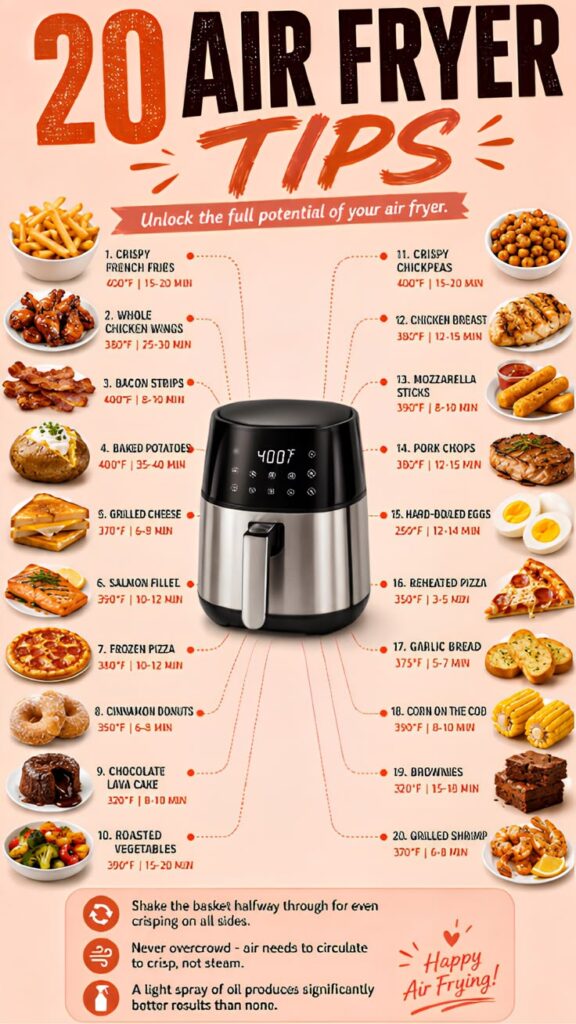
One of the most useful things you can keep in your kitchen is a reliable air fryer cooking time chart. Instead of guessing whenever you’re preparing something new, a simple reference gives you a practical starting point for setting the temperature and timer. The chart below covers all 20 foods from the original air fryer tips infographic, including the favorites we’ve already discussed. The ranges have been adapted into reasonable starting estimates rather than treated as universal instructions. That’s important because different air fryers, food sizes, and preparation methods can produce noticeably different results.
Remember that an air fryer’s cooking temperature is the temperature of the hot air, not necessarily the temperature inside the food. A chicken breast placed in a 375°F appliance does not instantly reach that temperature internally, and a timer finishing does not prove that the meat is safe to eat. For recipes involving raw meat, poultry, fish, or reheated leftovers, the appropriate internal temperature or safe doneness standard must take priority over the clock. These distinctions are especially important if you’re using a cooking chart for the first time. The FoodSafety.gov and FDA guidelines provide a useful foundation for checking those foods safely. FoodSafety.gov+1
| # | Food | Air fryer setting | Approximate time |
|---|---|---|---|
| 1 | Crispy French fries | 380°F / 193°C | 15–25 min |
| 2 | Chicken wings | 380–400°F / 193–204°C | 20–30 min |
| 3 | Bacon strips | 350°F / 177°C | 7–12 min |
| 4 | Baked potatoes | 400°F / 204°C | 35–50 min |
| 5 | Grilled cheese | 370°F / 188°C | 6–9 min |
| 6 | Salmon fillets | 370–390°F / 188–199°C | 8–12 min |
| 7 | Small frozen pizza | 360–380°F / 182–193°C | 7–12 min |
| 8 | Cinnamon donuts, precooked | 350°F / 177°C | 3–6 min |
| 9 | Chocolate lava cake, from batter | 320°F / 160°C | 9–14 min |
| 10 | Roasted vegetables | 375°F / 190°C | 10–16 min |
| 11 | Crispy chickpeas | 390°F / 199°C | 12–20 min |
| 12 | Chicken breast | 375°F / 190°C | 12–20+ min |
| 13 | Mozzarella sticks, frozen | 390°F / 199°C | 5–8 min |
| 14 | Pork chops | 375°F / 190°C | 10–16+ min |
| 15 | Hard-cooked eggs in shell | 270°F / 132°C | 14–18 min |
| 16 | Reheated pizza | 325–350°F / 163–177°C | 3–6 min |
| 17 | Garlic bread | 350°F / 177°C | 4–7 min |
| 18 | Corn on the cob | 390°F / 199°C | 8–12 min |
| 19 | Brownies, from batter | 320°F / 160°C | 15–25+ min |
| 20 | Grilled shrimp | 370°F / 188°C | 6–9 min |
These are approximate starting ranges for common portion sizes, not tested specifications for every appliance or product. Package directions, recipe-specific instructions, and safe doneness checks take precedence. The egg timing assumes a suitable air fryer that permits cooking eggs in their shells; cook until yolks and whites are firm.
And what about the delicious foods we haven’t explored in detail yet? Each of them deserves a little attention because the smallest adjustments can make a big difference.
Cinnamon donuts: If you’re craving a cozy, sweet treat, try warming fully cooked cinnamon donuts in your air fryer. A few minutes at a moderate temperature can refresh their texture before you finish them with cinnamon sugar. For homemade donuts made from raw dough, use a recipe developed specifically for your air fryer and verify they’re fully baked rather than relying on reheating times. The fragrance of warm cinnamon drifting through your kitchen is enough to make any afternoon feel special.
Chocolate lava cake: Imagine breaking into a delicate chocolate cake and watching warm chocolate spill into the center of your plate. Air fryers can prepare individual lava cakes in appropriately sized, oven-safe ramekins, although exact timing depends heavily on the batter and dish dimensions. For desserts made with raw eggs and flour, use a tested recipe with suitable ingredients and cooking instructions; don’t assume a liquid center made from undercooked batter is automatically safe. A specially prepared chocolate ganache center offers a lovely alternative for creating that flowing chocolate effect. Finish with berries or a little powdered sugar for a beautiful dessert.
Mozzarella sticks: There’s nothing quite like biting into a crunchy coating and discovering melted mozzarella inside. Frozen mozzarella sticks often work well in air fryers because their prepared coating is designed to become crisp during cooking. Arrange the sticks in a loose layer and check them before the recommended finish time, especially if your appliance cooks aggressively. Once cheese starts escaping through the coating, they’re likely becoming overdone. Serve immediately with marinara sauce while the centers are warm and stretchy.
Pork chops: A well-seasoned pork chop can become a satisfying family dinner when cooked carefully. Rub the meat with a small amount of oil, paprika, garlic powder, and your favorite herbs before arranging it in the basket. Cooking times vary greatly depending on thickness and whether the chop contains a bone. For whole-cut pork chops, confirm a minimum internal temperature of 145°F (63°C) followed by a three-minute rest.
That simple thermometer check helps you avoid both unsafe undercooking and unnecessary overcooking.
Hard-cooked eggs: If you’ve never prepared eggs in an air fryer, the technique can seem a little unusual at first. Some appliances can cook eggs in their shells using relatively low heat, but results differ significantly between models. Start with a recipe compatible with your machine, monitor the results, and cool the eggs promptly after cooking. For ordinary egg preparation, FDA guidance recommends cooking until the yolk and white are firm.
Once cooled and peeled, the eggs are perfect for a quick breakfast, salads, or meal preparation.
Garlic bread: A warm slice of garlic bread has a way of making even a simple bowl of pasta feel like a special dinner. Spread bread with a mixture of softened butter, minced garlic, parsley, and a little salt. Place the slices in your air fryer and heat until the edges begin to turn golden and crisp. Add grated mozzarella or Parmesan for a richer variation, but watch carefully because bread can brown very quickly. Serve it immediately while the butter is fragrant and the crust is still deliciously crisp.
Corn on the cob: Sweet corn becomes especially delicious when its kernels develop a little color and a gently roasted flavor. Lightly coat the ears with oil or melted butter, then season with salt and pepper. Rotate them during cooking to encourage more even browning. Afterward, add lime juice, chopped cilantro, chili powder, or crumbled cheese for a flavorful finishing touch. It’s a cheerful, colorful side dish that pairs beautifully with grilled chicken, pork chops, and summer-inspired dinners.
Brownies: Yes, your air fryer can help create beautiful chocolate brownies when you use the right pan and an appropriately developed recipe. Pour prepared batter into a small, air fryer-safe baking pan, taking care not to overfill it. Because hot air circulates around the pan, the edges may bake faster than the center, so checking for doneness is essential. A cake tester can help assess the texture, although brownies may remain slightly moist in the center depending on the recipe. Let them cool before slicing, then enjoy them with vanilla ice cream for a dessert that feels wonderfully indulgent.
Grilled shrimp: Shrimp are an excellent choice when you’re craving a flavorful meal without a long cooking process. Toss peeled, deveined shrimp with olive oil, garlic, paprika, lemon zest, and a little salt. Arrange them in a single layer and cook until the flesh becomes pearly or white and opaque.
Avoid leaving them in the basket longer than necessary, as shrimp can become firm and rubbery when overcooked. Finish with lemon juice and fresh parsley, then serve over rice, pasta, or a crisp green salad.
Food Safety and Common Air Fryer Mistakes
Cooking delicious meals should always go hand in hand with keeping the people you love safe. It’s easy to focus on the crisp exterior of chicken, the beautiful color of salmon, or the tempting aroma of reheated leftovers. But appearance alone isn’t a reliable way to know that many foods have reached a safe temperature. A digital food thermometer is one of the most valuable inexpensive tools you can keep in your kitchen. It allows you to verify the center of thicker foods rather than relying entirely on cooking times or the color of the outside.
According to FoodSafety.gov, the following minimum internal temperatures apply to several common foods. These are temperatures inside the food, not the settings you select on your air fryer. FoodSafety.gov
| Food | Safe internal temperature or guidance |
|---|---|
| Chicken and other poultry | 165°F / 74°C |
| Whole-cut pork chops | 145°F / 63°C, rest 3 minutes |
| Ground beef and pork | 160°F / 71°C |
| Fish such as salmon | 145°F / 63°C, or approved visual doneness guidance |
| Leftovers and casseroles | 165°F / 74°C |
| Egg dishes | 160°F / 71°C |
| Shrimp | Pearly or white, opaque flesh |
Avoiding common cooking mistakes is equally important for getting excellent results. Many disappointing air fryer meals happen not because the recipe is bad, but because ingredients are too wet, the basket is overloaded, or the food is left untouched throughout cooking. Even a high-quality air fryer can’t circulate hot air efficiently through a densely packed pile of potatoes. Small changes in preparation often make a tremendous difference. Keep these practical habits in mind whenever you start cooking:
- Don’t overcrowd the basket. Allow enough room for hot air to circulate around the food.
- Shake or turn ingredients when appropriate. This improves exposure to heat and helps prevent uneven browning.
- Dry wet foods before air frying. Excess moisture can interfere with crispiness.
- Avoid excessive oil. Use only what your ingredients need, and follow the appliance’s grease-management instructions.
- Keep loose parchment paper away from heating elements. Only use liners that are approved for your model, and never preheat with an unsecured liner.
- Clean the appliance regularly. Built-up grease and food debris can cause unpleasant odors, smoke, and cooking problems.
- Always check safe doneness. The timer is only a guide, especially when cooking raw animal products.
One particularly important point concerns commercially prepared frozen foods. A breaded chicken product can look golden and fully cooked even when the chicken inside is still raw. The USDA specifically warns that certain frozen breaded poultry products should be treated as raw and cooked according to their instructions until they reach 165°F (74°C).
If a package says to cook the product in a conventional oven and provides no air fryer directions, don’t automatically substitute a random air fryer time. Instead, check the manufacturer’s preparation guidance and verify the appropriate safe internal temperature.
Cleaning and maintaining your appliance is another small habit that can make cooking more enjoyable. After use, allow the air fryer to cool before removing the basket and washing its components according to the manufacturer’s instructions. Soft sponges and nonabrasive cleaning products are usually preferable for protecting nonstick surfaces. Keep the heating element and interior free of accumulated grease, and never immerse the electrical housing in water. When your appliance is clean, your ingredients are properly prepared, and you understand how to adjust cooking times, the whole experience becomes more enjoyable. You can focus less on worrying about dinner and more on the pleasure of creating something delicious.
Conclusion: Make Every Meal Something Special
An air fryer is more than just another appliance sitting on your kitchen counter. In the right hands, it can become a reliable companion for creating warm, comforting meals, experimenting with new flavors, and making everyday cooking feel genuinely exciting. From crispy French fries and juicy chicken wings to delicate salmon and indulgent chocolate desserts, the possibilities are wonderfully varied. You don’t need a professional kitchen, expensive ingredients, or years of cooking experience to begin enjoying delicious results. What you need is curiosity, a little patience, and a willingness to learn from each meal.
The most valuable air fryer tips are also the simplest: allow room for airflow, dry ingredients when needed, use oil thoughtfully, monitor cooking times, and always verify safe doneness. Those small habits can help transform meals that are merely acceptable into dishes you feel proud to serve. You’ll gradually discover which settings work best for your particular appliance and which recipes your family requests again and again. And perhaps the best part is that cooking becomes less like a chore and more like a rewarding daily ritual.
So the next time you open your refrigerator and wonder what to make, remember how many delicious possibilities are already within reach. A few potatoes can become crispy golden fries, a simple chicken breast can turn into a satisfying dinner, and a handful of ingredients can create a dessert worth sharing. Your next favorite meal might be only a few minutes of preparation away. Happy air frying, and may every bite bring a little extra joy to your table!
Frequently Asked Questions About Air Fryer Cooking
1. What is the secret to making food extra crispy in an air fryer?
The biggest secret is allowing sufficient airflow around the food. Dry your ingredients, use a light coating of oil when appropriate, avoid overcrowding, and shake or turn the food when needed. Preheating can also help create more consistent results in appliances that benefit from it. For potatoes, evenly sized pieces and thoroughly dried surfaces make an especially noticeable difference.
2. Do you need to use oil when cooking in an air fryer?
Not necessarily. Foods such as bacon, chicken wings, and many frozen prepared snacks may contain enough fat to brown without added oil. Fresh potatoes and vegetables often benefit from a small amount, which can help seasonings adhere and improve surface browning. Start with a little and adjust according to your food and appliance.
3. Can you cook frozen food directly in an air fryer?
Yes, many frozen foods can be cooked directly from frozen, making air frying particularly convenient for busy days. Frozen fries, some vegetables, and certain prepared snacks are common examples. However, you should follow the manufacturer’s instructions, especially for raw poultry products. Never assume a frozen food is precooked simply because it has a browned or breaded exterior.
4. Why does my air fryer food sometimes turn out soggy instead of crispy?
Soggy results often happen because the basket is overcrowded, the ingredients contain too much surface moisture, or the food hasn’t received enough exposure to circulating hot air. Cooking too much at once can also cause ingredients to release moisture faster than it escapes. Try smaller batches, dry ingredients thoroughly, and shake the basket during cooking. Those simple adjustments can noticeably improve the final texture.
5. What are the best foods to cook in an air fryer for beginners?
French fries, roasted vegetables, garlic bread, grilled cheese sandwiches, and frozen mozzarella sticks are approachable choices for beginners. These recipes help you understand how your air fryer browns food and how cooking times change with different ingredients. Once you’re comfortable, try chicken, pork, salmon, or shrimp while using the appropriate safe doneness checks. Starting with familiar foods makes it easier to build confidence and discover your own favorite recipes.