
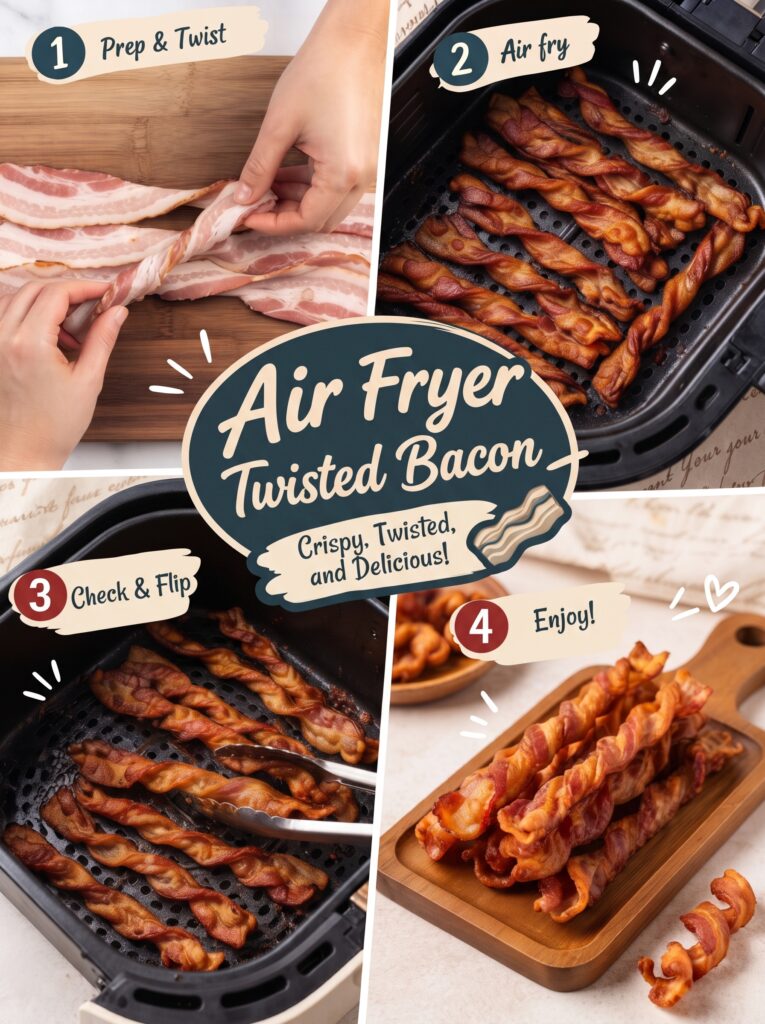

Air fryer twisted bacon is the kind of breakfast that makes people stop mid-conversation and ask, “Wait, how did you do that?” Each strip is coiled into a loose spiral, so it cooks up crisp on the outside and tender in the middle. It’s also a lot less greasy than the pan-fried version.
If you’ve ever stood over a spitting skillet, dodging splatter and fishing out curled, burnt edges, this recipe will feel like a small act of mercy.
Twisting bacon is a modern home-kitchen habit, not a centuries-old tradition. Bacon itself has deep roots: salt-cured pork belly shows up in cuisines from China to Britain to the American South, and it has long been treated as a pantry staple rather than a luxury. The twist is what home cooks and food bloggers added once air fryers landed on countertops, and it works for a simple reason. A spiral shape gives you more crunch and more chew in a single bite.
Why this recipe works
Bacon in a pan has a built-in problem. It sits in its own rendered fat, so the underside fries while the top stays pale. You flip, you fuss, and you end up with strips that are crisp in one spot and floppy in another.
An air fryer solves this with moving hot air. The fat drips down and away from the meat, so the bacon roasts rather than fries. The twist adds peaks and valleys that catch the airflow from every direction.
You get a strip with real texture: shattering at the ridges, tender at the folds, and deeply savory throughout.
It also happens to suit a healthy recipe mindset, within reason. Bacon will never be a health food, and I won’t pretend otherwise. But because the rendered fat collects below the basket instead of pooling around the meat, you eat a leaner, less oily strip than the skillet version gives you.
Pair it with eggs, fruit, and something green, and you have a balanced plate where bacon plays a supporting role.
A kitchen moment worth sharing
I started twisting bacon on a slow Sunday when my niece announced that “flat bacon is boring.” She was seven, and she was right. I coiled a few strips around my finger, tucked them into the basket, and honestly expected a tangled mess.
What came out was a tray of golden spirals that disappeared within minutes. Now I make them for brunch gatherings, holiday mornings, and the occasional weeknight breakfast-for-dinner.
They look impressive, but the effort is closer to folding a napkin than to cooking.
Ingredient spotlight: the bacon itself
Bacon is the star here, so buy it with intention. The single most important choice is thickness.
Choose thick-cut bacon, ideally around 1/8 inch (3 mm) per slice. Thin, wafer-style strips tear when you twist them and overcook before they ever develop chew. Thick-cut strips hold their spiral, stay juicy in the center, and crisp up at the edges without crumbling.
Here’s what to look for at the store:
- Good meat-to-fat ratio. Look for visible streaks of pink meat running alongside the white fat. Strips that are mostly fat will shrink dramatically and leave you with very little to eat.
- Dry-cured or naturally smoked, when you can find it. Hardwood smoking (applewood, hickory, or cherrywood) gives deeper flavor than liquid smoke added during processing.
- Reasonable sodium. Bacon is salty by nature, and rendering concentrates the salt. If you plan to add a glaze or serve it with salty cheese, a lower-sodium option keeps the plate balanced.
- A short ingredient list. Pork, water, salt, sugar, and curing agents are normal. A long list of additives usually signals a wetter, more watery strip.
If you can’t find thick-cut, ask the butcher counter to slice it for you, or use center-cut bacon and handle it gently.
Smart substitution: turkey bacon works if you want something leaner, though it needs a light brush of oil because it has almost no fat of its own. It also won’t twist quite as tightly, so expect a looser, flatter curl.
Pro technique: two mistakes to avoid
Even a forgiving recipe has a few traps. These two cause most of the disappointment.
1. Overcrowding the basket. Twisted bacon needs space for hot air to circulate around each spiral. Pack the basket tightly and the strips steam instead of crisping, which gives you a soft, uneven result.
Leave a little breathing room between each twist, and cook in batches if your air fryer is small.
2. Starting with a cold, dry basket and ignoring the grease. Bacon renders a surprising amount of fat, and if it pools too deeply it can smoke.
Check the drawer after a batch and pour off excess grease before the next one. A thin layer of water in the bottom of the drawer (never in the basket itself) can also help reduce smoking in some models, though you should check your manufacturer’s guidance first.
Two more small habits make a noticeable difference:
- Pat the bacon dry if the package looks wet. Surface moisture slows browning.
- Let the spirals rest for a minute or two after cooking. They firm up and crisp further as the residual heat settles.
A note on dietary needs
Plain bacon is naturally gluten-free and works for low-carb and keto-style eating, since it contains almost no carbohydrate. If you use the optional maple or brown sugar glaze, the carbs rise slightly, so skip the sweetener for a strict keto plate.
Standard pork bacon is not halal or kosher. Look for certified beef bacon or turkey bacon if those matter to you.
Always read labels on flavored or pre-seasoned products, because some contain added gluten or sugar.
Why twisted bacon deserves a spot in your rotation
Beyond the looks, there are practical reasons to love it.
The spiral shape is portable, so it’s easy to pile onto a platter, tuck into a breakfast sandwich, or crumble over a salad. It cooks evenly without the need for flipping. And it makes your kitchen smell like a diner without leaving a greasy film on the stovetop.
It’s also genuinely forgiving. If a spiral loosens, nothing is ruined. It simply becomes a slightly looser curl that tastes the same.
For hosts, that matters. You can have a tray of impressive-looking bacon on the table while you pour coffee and chat, rather than hovering over a skillet.
Once you’ve made it a couple of times, you’ll find yourself reaching for the air fryer any time bacon is on the menu.
Ingredients
This recipe is built around bacon, with a few optional extras to change the flavor. Amounts below make about 8 twisted strips, enough for 3 to 4 people as a side.
For the twisted bacon
- 8 slices thick-cut bacon, about 8 oz (225 g) (choose strips roughly 1/8 inch or 3 mm thick; center-cut works too)
- 1 tablespoon (15 ml) pure maple syrup (optional; honey or hot honey also works)
- 1 tablespoon (12 g) light brown sugar (optional; coconut sugar is a good swap)
- ½ teaspoon (1 g) smoked paprika (use sweet paprika if you prefer less smoke)
- ¼ teaspoon (0.5 g) freshly ground black pepper (cracked coarsely for more bite)
- A pinch of cayenne pepper, about 1/8 teaspoon (0.3 g) (optional, for gentle heat)
- 1 teaspoon (5 ml) neutral oil (only needed if using turkey bacon)
For finishing
- 1 tablespoon (3 g) finely chopped fresh chives (or sliced green onion tops)
- A few flakes of flaky sea salt (taste first, since bacon is already salty)
- 1 small squeeze of lemon juice, about ½ teaspoon (2.5 ml) (optional, to brighten the richness)
Equipment notes
- An air fryer, 4 to 6 quarts (3.8 to 5.7 L). A basket-style model works well, and an oven-style air fryer also fits more strips per batch.
- Perforated parchment liner (optional; makes cleanup easier, but only use the perforated kind so air can circulate).
- Tongs for lifting the hot spirals out.
- Paper towels for draining.
Ingredient notes and smart swaps
Bacon: the thicker the better. If your strips are thin, handle them gently and expect slightly less chew. Day-old bacon that has been in the fridge straight from the package is easier to twist than room-temperature bacon, which gets floppy and slippery.
Sweetener: the maple and brown sugar are a light glaze, not a candy coating. If you skip them, the bacon is still excellent, and it becomes a better fit for low-carb or gluten-free plates.
Maple syrup gives a clean, woody sweetness. Honey is stickier and browns faster, so keep a closer eye on it.
Spice: smoked paprika amplifies the smoky flavor and gives the bacon a rusty-gold color. Chili powder or a pinch of garlic powder also works well. If you’re serving kids, leave out the cayenne.
Oil for turkey bacon: turkey bacon has so little fat that it can dry out and turn brittle in the air fryer. A light brush of oil keeps it supple. Regular pork bacon needs no oil at all.
Vegetarian option: if you’re cooking for someone who skips pork, thick strips of smoked tempeh or mushroom “bacon” can be seasoned the same way. They won’t twist like the real thing, but they pick up the smoky-sweet profile nicely.
Quantity: the recipe scales easily. Double it for a crowd, but plan on cooking in batches rather than stacking strips on top of each other.
What to Serve With
Twisted bacon is rich, salty, and a little sweet, so it loves company that adds freshness, creaminess, or acidity. Here are pairings that make the plate feel complete.
Breakfast and brunch pairings
- Air fryer omelette. If you’re already using the air fryer for bacon, an omelette from the same machine keeps breakfast simple. The soft, custardy eggs contrast with the crisp spirals, and you skip the hot stove entirely.
- Scrambled eggs with chives. Creamy eggs soften the saltiness of the bacon and give each bite a gentle, balancing base.
- Buttermilk pancakes or waffles. The sweet-salty combination is classic for a reason. A little maple drizzled over both ties the plate together.
- Avocado toast on sourdough. Cool, buttery avocado against warm, crunchy bacon gives you contrast in both temperature and texture. A squeeze of lime keeps it lively.
- Roasted breakfast potatoes. Crispy edges and fluffy centers soak up flavor, and potatoes make the meal filling without competing with the bacon.
Lunch and dinner pairings
- A sharp green salad with lemon vinaigrette. Acidity cuts through the richness. Crumble a spiral or two over the greens for a smoky, crunchy topping.
- Tomato soup or a grilled cheese sandwich. The bacon adds a salty, textural layer to a comforting classic, and it works well tucked inside the sandwich.
- Roasted Brussels sprouts or green beans. Slightly bitter vegetables balance the sweetness of a maple glaze and add some color.
- Mac and cheese. Crumbled twisted bacon on top delivers crunch against the creamy pasta.
Beverage suggestions
A good drink resets your palate between bites of rich bacon.
- Fresh orange or grapefruit juice. The acidity and brightness refresh the palate, and it’s a natural fit for brunch.
- Strong black coffee or a cappuccino. The roasted bitterness plays well against the smoky, salty meat. A splash of milk rounds it out.
- Iced tea with lemon. Light and tannic, it cleans the palate without adding sugar.
- Sparkling wine or a mimosa. The bubbles and acidity cut through fat beautifully, which makes this a good option for a weekend celebration.
- A crisp lager or pilsner. For a casual evening serving, this clean, lightly bitter style refreshes without overpowering.
Sauces and dips
Bacon spirals double as a snack or appetizer, and a good dip turns them into something special.
- Maple-Dijon mustard. Equal parts tang and sweetness, it complements both pork and a sweet glaze.
- Sriracha mayo. Creamy heat for anyone who likes a kick.
- Greek yogurt with herbs. Cooling, light, and slightly tart, it offsets the richness.
- Spicy ketchup or tomato jam. A sweet-savory option that works with breakfast sandwiches.
Garnish and finishing ideas
A little finishing touch makes the platter look intentional.
- Fresh chives or parsley for color and a mild oniony freshness.
- A dusting of black pepper or chili flakes for visual drama and a hint of heat.
- A drizzle of hot honey just before serving for a glossy, sweet-spicy finish.
- Thin slices of fresh fruit, such as strawberries or peaches, to brighten a brunch board.
Putting a plate together
A few combinations that work every time:
- The classic brunch plate: two spirals, soft scrambled eggs, buttered toast, and fresh orange slices.
- The cozy weekend plate: pancakes, twisted bacon, and a bowl of mixed berries.
- The light and lively plate: a bed of arugula with lemon dressing, a soft-boiled egg, and crumbled bacon on top.
- The party platter: a tray of spirals with two or three dipping sauces, a bowl of pickles, and some fresh fruit for contrast.
Twisted bacon is flexible, so use it as a side, a topping, a snack, or the centerpiece of a casual spread. However you serve it, aim for something fresh or acidic nearby, because that’s what keeps a rich, salty food from feeling heavy.